

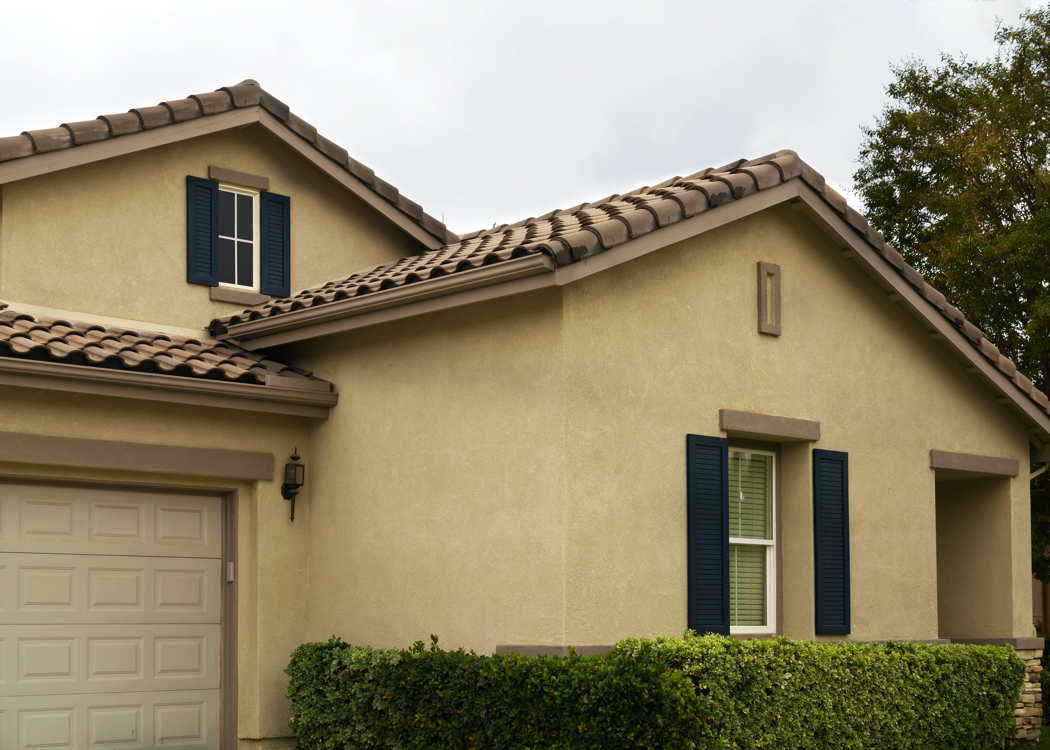

What Is Stucco Siding?
Stucco is a cement-based exterior finish that has been used on homes for centuries. It creates a seamless, textured surface that gives homes a distinctive, elegant appearance. On Long Island, stucco siding has a long history, and you can find stucco homes in communities from Manhasset to Montauk. Whether applied to an entire home or used as an accent on portions of the facade, stucco delivers a look that is both timeless and versatile.
Traditional stucco, also called hard-coat stucco, consists of three layers of Portland cement-based plaster applied over metal lath. The base coat bonds to the lath, the brown coat provides a level surface, and the finish coat delivers the final texture and color. Synthetic stucco, known as EIFS (Exterior Insulation and Finish System), uses a foam insulation board with a thin acrylic finish coat. Each system has distinct characteristics suited to different situations.
Traditional Stucco vs. Synthetic Stucco (EIFS)
Traditional hard-coat stucco is extremely durable and breathable. It allows moisture vapor to pass through the wall assembly, which is an important quality in Long Island's humid climate. When properly installed over a drainage plane, traditional stucco can last 50 years or more with minimal maintenance. Its rigid, cement-based composition resists impact damage and fire.
Synthetic stucco (EIFS) gained a negative reputation in the 1990s due to moisture problems caused by improper installation. However, modern drainable EIFS systems have addressed those issues with drainage channels behind the foam board that allow water to escape. EIFS offers superior energy efficiency due to the continuous insulation layer and provides a smoother, more uniform finish than traditional stucco. It is also lighter and can be applied to a wider range of substrates.
For Long Island homes, the choice between traditional and synthetic stucco depends on your priorities. If breathability and maximum durability are paramount, traditional stucco is the better choice. If energy efficiency and a perfectly smooth finish are your goals, modern drainable EIFS is worth considering. In either case, the installer's expertise is the most critical factor in long-term performance.
Stucco Finishes and Textures
One of stucco's greatest design advantages is the range of textures available. A smooth or sand finish creates a clean, contemporary look popular on modern and Mediterranean-style homes. A dash finish adds more texture with a rougher surface that catches light and shadow beautifully. A lace or skip-trowel finish creates a subtle, organic pattern that works well on homes of any style.
Stucco can be colored integrally by adding pigment to the finish coat mix, or it can be painted after curing. Integral color penetrates the entire finish coat, so minor chips or scratches do not reveal a different color underneath. Painted stucco allows for easier color changes down the road. On Long Island, earth tones, warm whites, and soft grays are the most popular stucco colors.
Installation and Climate Considerations
Proper stucco installation on Long Island must account for our climate's freeze-thaw cycles, driving rain, and coastal salt air. The wall assembly behind the stucco must include a weather-resistant barrier and a drainage plane that allows any water that penetrates the stucco to escape before it reaches the sheathing. Control joints are placed at regular intervals and around openings to accommodate the expansion and contraction that occurs with temperature changes.
Application should be performed when temperatures are above 40 degrees Fahrenheit and ideally below 90 degrees, with the surface protected from direct sun during curing. This typically means the best installation window on Long Island runs from late spring through early fall. Brothers Aluminum's stucco installation team understands the specific requirements for successful stucco application in our climate.
Maintenance and Repairs
Stucco siding requires periodic inspection and minimal maintenance. Walk around your home at least once a year and look for cracks, especially around windows, doors, and where different materials meet. Small hairline cracks are common and can be sealed with a quality elastomeric caulk. Larger cracks or areas where the stucco has separated from the substrate require professional repair.
Cleaning stucco is straightforward. A garden hose with a spray nozzle removes surface dirt effectively. For mildew stains, which can develop on north-facing walls in our humid climate, a diluted bleach solution or a commercial stucco cleaner applied with a soft brush will restore the surface. Avoid power washing at high pressure, which can damage the finish coat and force water behind the stucco.
Get a Free Stucco Estimate
If you are considering stucco for your Long Island home, whether as a full exterior finish or an accent application, Brothers Aluminum has the experience and expertise to deliver exceptional results. Contact us at 516-872-0947 to schedule a free consultation.