

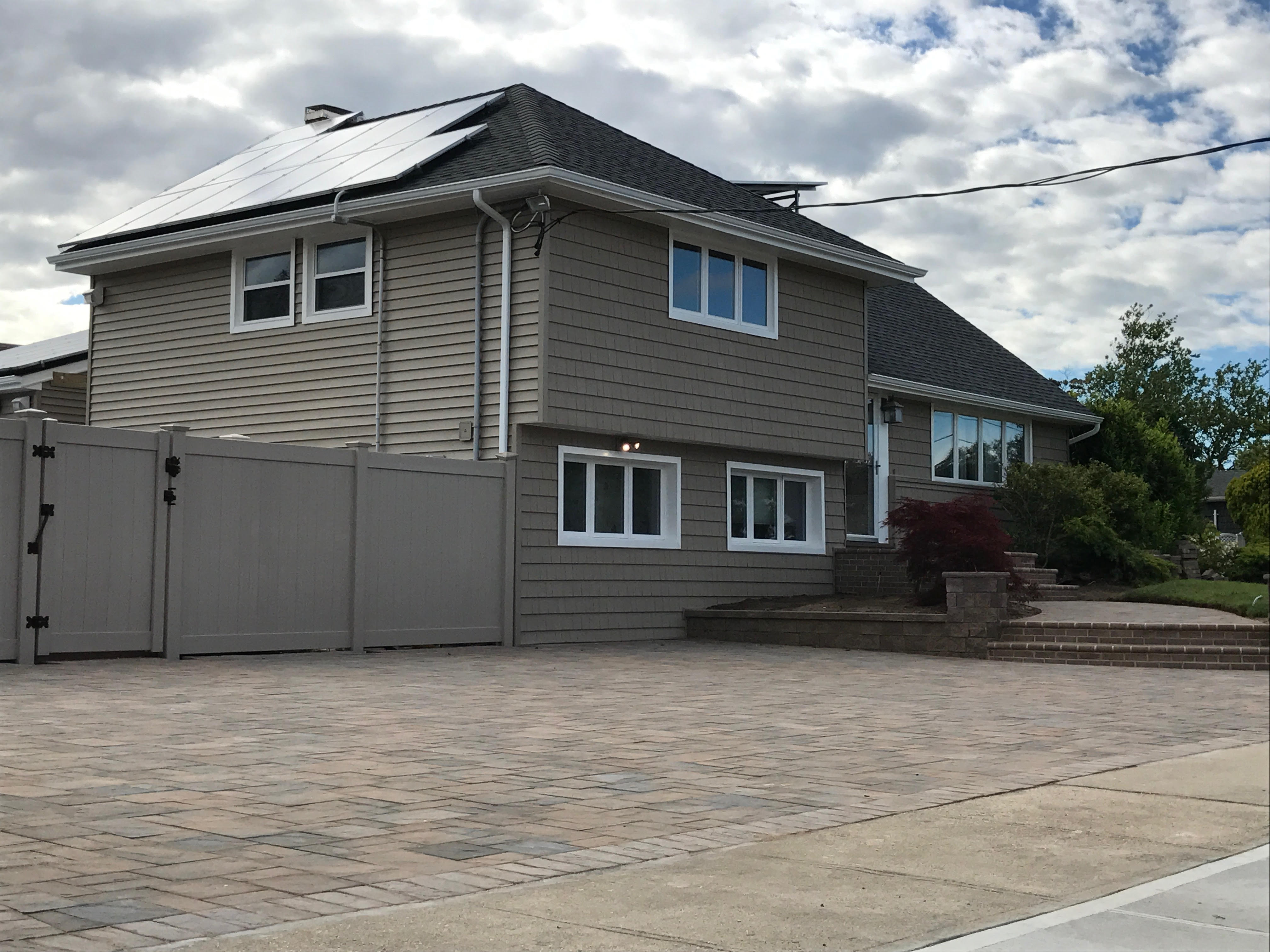

Why Pavers Are Ideal for Long Island Properties
Paver driveways and walkways have become increasingly popular across Long Island, and the reasons go beyond aesthetics. Unlike poured concrete, which cracks under the freeze-thaw cycles that define our winters, or asphalt, which softens in summer heat, individual pavers flex independently with the ground beneath them. This makes them exceptionally well-suited to the expansive clay soils found in many parts of Nassau and Suffolk counties.
Pavers also offer unmatched design versatility. Whether your home is a classic Colonial in Garden City, a ranch in Commack, or a Cape Cod in Lindenhurst, there is a paver style, color, and pattern that will complement your architecture and enhance your curb appeal. The variety of options available today means your driveway and walkways can be as unique as your home itself.
Popular Paver Materials and Styles
Concrete pavers are the most widely used option for Long Island driveways and walkways. They are manufactured under high pressure, resulting in a dense, durable product that resists staining and wear. Available in an enormous range of colors, shapes, and textures, concrete pavers can mimic the look of natural stone, brick, or slate at a fraction of the cost.
Natural stone pavers, including bluestone, travertine, and granite, offer a premium aesthetic that many homeowners find irresistible. Bluestone, quarried right here in the Northeast, is particularly popular on Long Island for walkways and patios. Its natural blue-gray tones complement the region's architectural styles beautifully, though it comes at a higher price point than concrete pavers.
Brick pavers provide a timeless, classic look. They are extremely durable and develop a beautiful patina over time. For homeowners seeking a traditional appearance, especially in historic communities, brick pavers are an excellent choice. Permeable pavers are another option gaining traction, allowing rainwater to filter through the surface and into the ground below, which can help manage stormwater runoff in areas with drainage concerns.
Design Patterns and Layout Options
The pattern in which pavers are laid has a significant impact on the finished appearance. Herringbone, in which pavers are set at 45 or 90-degree angles, is the most structurally sound pattern for driveways because the interlocking arrangement distributes weight evenly and resists shifting under vehicle traffic.
Running bond, similar to a brick wall pattern, creates a clean, linear look that works well for walkways and paths. Basketweave alternates pairs of pavers in perpendicular orientations for a woven appearance. For larger driveways, circular or fan patterns can create a dramatic focal point, particularly around a center medallion or at the approach to the front entrance.
Borders in a contrasting color or material add definition and a finished look to any paver installation. A dark charcoal border around a lighter field, for example, creates a crisp frame that elevates the entire design.
The Installation Process
Proper installation is the foundation of a long-lasting paver driveway or walkway. The process begins with excavation to the appropriate depth, typically eight to twelve inches for driveways and six to eight inches for walkways. A geotextile fabric is laid over the subgrade to prevent soil migration into the base material.
Next, a base layer of crushed stone or gravel is installed in lifts and compacted with a plate compactor. This base layer provides structural support and drainage. A setting bed of coarse sand, typically one inch thick, is screeded level on top of the base. The pavers are then placed on the sand bed according to the chosen pattern, cut as needed to fit edges and curves.
Once all pavers are in place, polymeric sand is swept into the joints and activated with water. This sand hardens to lock the pavers together and prevent weed growth and insect infiltration. Finally, the entire surface is compacted one more time to set the pavers firmly into the sand bed. Edge restraints along the perimeter ensure the pavers stay in position over time.
Cost Factors for Long Island Paver Projects
Paver driveway costs on Long Island typically range from $15 to $35 per square foot installed, depending on the material, pattern complexity, and site conditions. A standard two-car driveway of approximately 600 square feet might cost between $9,000 and $21,000. Walkways are generally less expensive per square foot due to the thinner base requirements.
Factors that can increase costs include extensive excavation, poor soil conditions requiring additional base material, complex patterns with many cuts, and the removal and disposal of existing concrete or asphalt. Permeable paver installations also cost more due to the specialized base system required.
Maintenance and Longevity
Well-installed pavers require minimal maintenance. Annual or biannual sweeping and rinsing keep the surface clean. Every few years, you may need to add polymeric sand to joints that have settled and apply a sealer if you want to enhance the color and protect against staining.
One of the greatest advantages of pavers over poured concrete is repairability. If a paver cracks or becomes stained, you can remove and replace that single unit without disturbing the rest of the surface. If a utility company needs to access lines beneath your driveway, the pavers can be lifted, the work completed, and the pavers relaid without the ugly patches that plague concrete driveways.
Transform Your Property with Brothers Aluminum
Brothers Aluminum has been installing beautiful paver driveways and walkways for Long Island homeowners for over 40 years. From design consultation through final installation, we handle every detail. Contact us at 516-872-0947 for a free estimate.